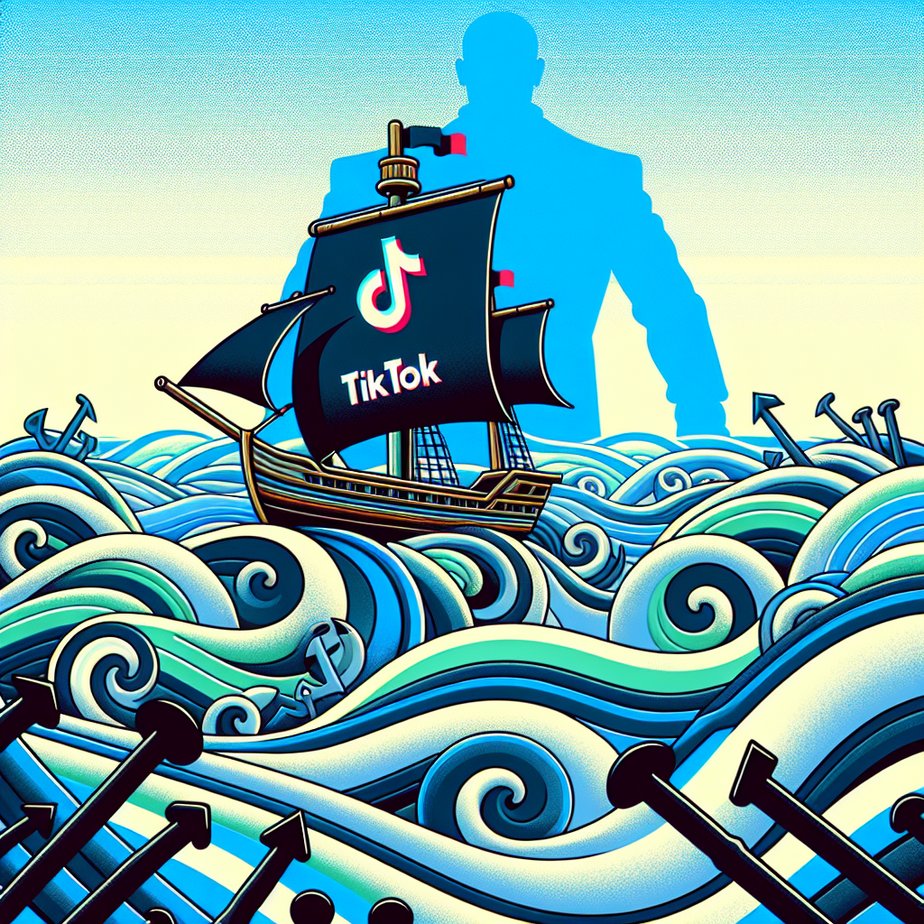
In a move that has satisfied pockets of both relief and skepticism, President Trump has signed an executive order that effectively shields TikTok from a looming ban in the United States. This decision came after months of intense negotiations and geopolitical tension over the Chinese-owned app’s future, which had become a flashpoint in the larger context of U.S.-China relations. Now, TikTok is slated to become a standalone U.S. entity, a change that aligns with an upcoming legal requirement in 2024 aimed at reducing the influence of foreign-owned apps on American digital territory.
The crux of the issue has been national security and data privacy concerns raised by various governmental bodies. With over 100 million active users in the U.S., TikTok has grown beyond a mere social media app into a cultural hub and a marketing force. The fear was that Chinese ownership equated to potential undue influence and access by the Chinese government, something that many U.S. officials deemed unacceptable without stringent oversight. The current administration’s solution—a forced divestment into a separate U.S. entity—may serve as a precedent for how international tech companies may need to adapt to shifting regulatory landscapes.
This executive order serves a dual purpose: assuaging national security fears while preserving a widely-used platform that has become a key space for American content creators and businesses alike. Critics, however, argue that merely changing ownership does not automatically resolve underlying data privacy concerns. They advocate for transparent algorithms and robust data management policies that ensure user information remains secure irrespective of the company’s headquarters.
While the impending spin-off of TikTok in the U.S. market could arguably strengthen tech competition and innovation domestically, it also brings about questions on the app’s future cultural orientation. Will TikTok’s signature elements, deeply rooted in its Chinese origins, dilute as it molds itself into a more Westernized entity? Moreover, how will this impact the creators and influencers who have built their brands on the app, often embracing its global fusion of ideas and trends?
In conclusion, Trump’s approval of the TikTok deal showcases a pivotal moment in the digital age where cross-border tech enterprises must carefully navigate sovereignty and security concerns. As the app transitions into a U.S.-centric model, how it evolves could very well determine the approach and success of other global tech companies in similar predicaments. This scenario not only highlights the delicate balancing act of digital diplomacy but also the intricate interplay of technology, culture, and governance in our interconnected world.