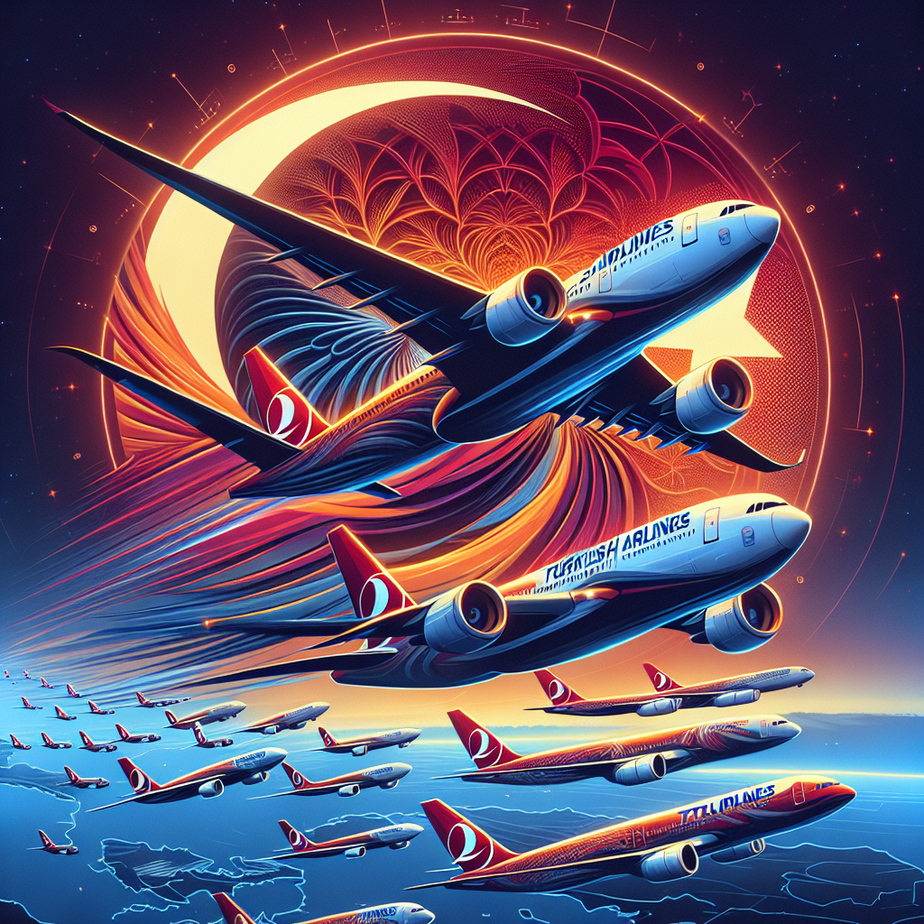
In a bold maneuver set to redefine its fleet capacity, Turkish Airlines has unveiled plans to significantly expand its aircraft roster, adding a staggering 225 Boeing planes. This move not only marks a monumental investment in long-haul and efficiency-focused aviation technology but also underscores Turkish Airlines’ aspirations to solidify its standing among the global giants of air travel. Given its strategic positioning at the crossroads of Europe and Asia, the fleet expansion is anticipated to bolster its ability to connect more destinations seamlessly.
The details of this expansion reveal an intriguing mix of aircraft models. Turkish Airlines is set to integrate 75 Boeing B787-9 and B787-10 Dreamliners into its operations. Adding to this powerhouse combination are 150 Boeing 737-8/10MAX planes, well-known for their fuel efficiency and advanced aerodynamics. The strategic inclusion of these aircraft indicates a dual focus: enhancing long-haul capabilities while ensuring optimal fleet utilization for shorter routes, a staple of Turkish Airlines’ diverse network.
From an operational perspective, Boeing’s new-generation aircraft are expected to deliver substantial savings due to their lower fuel consumption and reduced maintenance costs. Hence, this massive injection of cutting-edge technology positions Turkish Airlines well for increased profitability, even as global aviation grapples with economic challenges. As of now, the airline is meticulously negotiating engine and maintenance contracts, signaling its intent to secure competitive terms that will support sustainable growth well into the next decade.
The timing of this announcement, made amid a global air travel resurgence post-pandemic, couldn’t be more pivotal. Turkish Airlines, with one of the world’s most comprehensive flight networks, stands to benefit significantly as international travel demand continues to rebound. By bolstering their fleet capacity now, they are strategically poised to absorb this demand, ensuring passengers enjoy comfort and convenience with a modernized fleet.
In conclusion, Turkish Airlines’ decision to acquire a large number of Boeing aircraft signals a confident stride into future skies. It’s a statement of intent to not only expand geographic reach but also to enhance service delivery through modern, eco-conscious technology. As these new planes gradually join the fleet from 2029 to 2034, passengers can expect an evolution in travel experience that could set new benchmarks within the aviation industry. With this forward-looking strategy, Turkish Airlines appears ready to soar to new heights, shaping its legacy as a leader in global aviation.